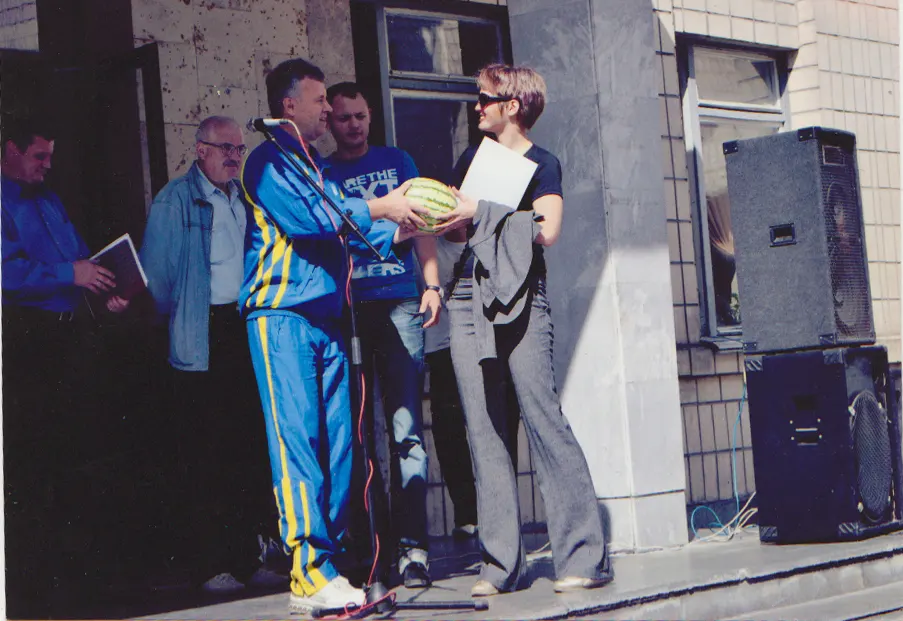
 "Why are you all so happy? Going to a wedding?"
"No! To prison!"
The law students I taught psychology to that semester had rather eccentric interests. As part of my course, these young souls desperately wanted to visit a psychiatric hospital, a prison, and a morgue. Museums, theaters, and other stuffy, "socially acceptable" venues held absolutely zero appeal for them.
As an educator, I accommodated this blatantly obvious thirst for knowledge. Especially since I firmly believe that the curiosity of today's youth should be nurtured, supported, and fiercely protected—the ultimate antidote to apathy and nihilism.
Out of the entire university administration, I was the only one captivated by the idea of securing this little adventure for my wards. They looked at me with skepticism, chuckled, and predicted that I’d never pull off this escapade on my own. Naturally, they refused to lift a finger to help. For some reason, my colleagues panicked and looked at me like I was insane: "Why do you even need this? You're not getting paid extra for it. Why waste your personal time?" But I was intrigued. It was a golden opportunity. Besides, I love a good thrill and jump at any excuse to get one.
Meanwhile, the Department of Corrections was thoroughly baffled by my enthusiasm:
"You want to get in where?? And drag your students along? This isn't a museum!"
To play hard to get, the head warden even managed to declare that half of Kyiv was dying to get into the region's penitentiaries... He wasn’t joking. Perhaps this is just the warped reality these prison bosses live in. A few years prior, another penal chief proudly informed me that "prison is the face of society."
I had to schlep over there for a permit about five times... And every single time, it played out bizarrely. For instance, I'd be asleep at 10 a.m. (which, to me, is the crack of dawn), minding my own business. Suddenly, the phone rings:
"The Head of the Department is expecting you at 10 a.m. to make a decision on your prison tour."
"It is currently two minutes to ten. If I don't manage to cross the entire city in two minutes, will he wait?"
"Well, maybe for fifteen minutes..."
The cab driver was quite bewildered when he found out where exactly I was flying off to, half-dressed and practically glowing with joy...
...Finally, I secured the golden ticket to visit Boryspil Correctional Colony No. 119 in the village of Martusivka. The protocol was incredibly strict: to gain access to this highly restricted facility, we had to submit our background info well in advance. On the way there, our faces were so radiant that strangers kept asking, "Are you all going to a wedding?" To which we'd gleefully reply, "No! To prison!" And why wouldn't we be ecstatic? We were about to touch the forbidden, to step inside a world they make movies about, a place the vast majority of people can only imagine.
The roaring, thunderous clank of the massive armored prison gates opening for us instantly wiped the smiles right off our faces. The dread deepened when we were ushered into a checkpoint with a massive inspection pit in the middle—designed to check the undercarriages of vehicles for anyone desperate enough to attempt an escape.
Stern guards scrutinized our IDs for what felt like an eternity before finally letting us through. The local warden explained that they housed 670 first-time offenders. Repeat offenders and recidivists are shipped off to other facilities. But when someone crosses the line for the very first time, they end up in a colony exactly like this one.
So, what's it like in there?
First of all, they marched us over to the local pre-trial detention center (SIZO). And "marched" is not an exaggeration: we had guards leading the way and a literal blocking detachment bringing up the rear. A SIZO is a temporary holding facility where individuals wait for their fate—criminal or otherwise—to be decided. Usually, this is where they dump the overflow from the Kyiv detention center (since Martusivka is the closest colony to the capital).
The rooms, roughly the size of maternity wards, are crammed with bunk beds, from which the local "inmates" watch TV. Almost all of them are startlingly young. The average age of a convict in the colony at the time was a mere 21, with the oldest being 65. Although, it's a funny thing—you can't accurately guess anyone's age with the naked eye in there. In this little SIZO, it wasn't as glaringly obvious; they were still, as the inmates themselves put it, "fresh." The shock comes later. You’ll see a rugged guy walking by who looks well past 40, only to find out he’s just 33...
This rapid-aging phenomenon affects the guards, too—on average, they look 5 to 10 years older than they are. Why? The sheer psychophysical tension. It weighs heavily on everyone. And they create it themselves: one side is desperate to break out, and the other is determined to keep them caged. This perpetual tug-of-war, no matter what level it operates on, doesn't stop for a single minute. A mistake here can cost you your life—a reality palpably reinforced by the guys with assault rifles keeping a razor-sharp watch from the guard towers, tracking everyone's every move.
By the way, the colony is ringed by several perimeters of towering concrete walls. The strips of sand in the summer and snow in the winter between them have to be meticulously maintained in specific patterns, instantly revealing if anyone has dared to step there. Not to mention the dense, intricate lacework of electrified barbed wire.
Predictably, in the first "tour room," the guys from the Martusivka SIZO weren't particularly chatty. They stared in bewildered awe—and a bit of panic—at the pretty co-eds, who were practically hiding behind one another, terrified to breathe, let alone ask questions. And honestly, there was nothing to say. What were they supposed to ask? "How's the time serving you?" It just felt inherently tactless. Everyone looked at me, banking on the assumption that a professor always has something to say. But all I managed to squeeze out was:
"Are you happy to see us?"
The atmosphere instantly thawed. Someone chuckled and invited us to stay with them and find out firsthand just how happy they were. At those words, a dreamy look washed over the "hosts'" faces, while the female students gasped and scrambled to move on.
An Interesting Observation
When our little group was at a distance, any convict who could manage it leaned out the windows, either clapping or shouting something. But the moment we got close, they fell dead silent and turned pale.
Next, we "went to quarantine." In these parts, this term refers to the initial intake ward for permanent residency. Unlike the SIZO, from which one might still get lucky and go home, "quarantine" is a one-way ticket to one of the rather cozy cells. Here, an individual is vetted for diseases, fitness for work, and their professional and personal leanings. The latter can be either positive or the exact opposite. The "positivists" are assigned jobs and integrated into local life. The rest are subjected to "educational influence" until their proximity no longer poses a threat.
As for the specifics of this "influence," the only thing we could verify with certainty was that the most defiant ones get thrown into "the hole"—a special isolation cell where a person is stripped of yard time and smoking privileges. That last measure is agonizingly brutal for heavy smokers. Which, in a prison population, is practically everyone.
Inspecting the tidy, modest little rooms—equipped with TVs, personal belongings, and even kittens—where anywhere from 4 to 15 convicts live together, naturally begged the question: "So, where are the cells?" As it turned out, these were the cells. From the inside, the prison essentially looked like a massive frat house or dorm.
Next, we moved on to the bakery. They showed us how the inmates cook and produce pasta and groats. A couple of guys in aprons mentioned that one of them was serving time for armed robbery, and the other for grand theft auto. After every single word, they’d nervously shoot a glance at our armed escorts, so they weren’t exactly bursting with eloquence either.
The massive dining hall, much like a university cafeteria, was nothing out of the ordinary. The only surprise was the menu—if the list of meals offered to the inmates was to be believed, they were being fed arguably better than my own students back at the university mess hall (meat and fish every single day). By the way, the same could be said about the daily schedule in their dorms: the inmates were allotted significantly more free time.
They treated us to some prison bread. It was rustic, reminiscent of a traditional Ukrainian village. It’s baked from low-grade flour—exactly the kind recommended for dietary and health purposes. Just a little more, and you could mistake this correctional facility for a wellness retreat. Perhaps because it actually used to be something similar: a rehab clinic for people with alcohol addiction.
‘Stole, drank, went to jail—romance!’
Finally, we managed to have a real chat with the "cons" themselves. They rattled off the specific articles of the Criminal Code they had been convicted under, while the law students flexed their legal knowledge: armed robbery, grievous bodily harm resulting in the death of the victim, murder... The guy doing time for murder was the most inconspicuous of the bunch. He refused to go into the gruesome details, opting instead to brag about the fact that, even behind bars, he had managed to finish writing a book that had just been published: The Day Begins with the Night.
As a psychologist, only one burning question haunted me: do these attackers look their victims in the eye? Does it matter to them who they are killing, crippling, or robbing? Or are they completely apathetic, caring only whether the victim is wearing a nice coat and has enough valuables to loot?
Our conversationalists dodged giving a straight answer. Some postured, playing the tough guy; others just smirked or outright refused to reply. One spun a wild detective yarn about evading investigators and laying low in "safe houses." But it all boiled down to one grim truth: they couldn't care less who suffered from their crimes. There are no noble "Robin Hoods" among them, punishing the wicked to help the good. To them, people are nothing more than prey, categorized by a single metric: are they an easy target or not?
And just like that, all that heroic bravado sloughed right off. No tragic backstory justifies attacking a random person. Justifies being so coldly indifferent. So maybe we should be just as indifferent to them? Because in this environment, humanity is synonymous with stupidity. It is that very vulnerability that, in their eyes, is our ultimate, unforgivable crime.
The students asked what these esteemed "cons" would improve in "their" facility. The question baffled them and sparked zero enthusiasm:
"We don't really think about that."
As for plans and dreams:
"Just want to get out of here in one piece, life will show what comes next."
Essentially, the future doesn't matter, they exist purely in the here and now, and as for fixing the system—they couldn't care less...
The most valuable takeaway from these conversations was the stark realization that the biggest problem these inmates faced during the pre-trial and trial phases was the sheer incompetence of lawyers. Approaching their duties as a mere formality, these attorneys formally destroyed human lives. This was their sole piece of advice to the students, the future legal minds: be true professionals, and if you make a mistake, find the guts to admit it and fix it.
Do you have handcuffs?
They led us onward. Into the riot gear room. The gadgets used to subdue an inmate look like long poles with barbed-wire collars at the end, and sticks with hooks for grabbing limbs. There were also massive sledgehammers for breaching doors, thin, razor-sharp probes for cell searches, specialized gloves for deflecting attacks, plastic riot shields (resembling medieval knight armor), bulletproof vests, and "deodorants" (pepper spray). Personally, I was absolutely captivated by the handcuffs. They radiated something genuinely terrifying, making their mere appearance mesmerizing... Not to mention the thrill when I asked the guards to cuff me, allowing me to dramatically rub my wrists afterward like a character in a movie (now I’m dying to buy a toy like that for myself—and a real police-issue one, not some cheap prop from a sex shop!).
Then we hit the club. It’s essentially an assembly hall, a fairly large space where various events (concerts, plays) take place. When we first walked in, every single inmate was sitting with their back to us. The wardens strictly forbade them from turning around. Later, we did manage to chat, although, once again, the students had no questions. A few of the closest convicts were giggling amidst the dead silence, which instantly triggered my inner professor:
"What’s so funny over there in the front row?!"
Though, in this setting, it would have been more accurate to say, "The front bench."
There is a small church on the colony grounds, and the parish elder is also a convict. He looks exactly like your quintessential clergyman: speaking in a slow, dignified cadence, well-versed in canon law. A theological debate actually erupted in there over which side of the Virgin Mary Jesus Christ should be depicted on (the inmates paint the icons themselves). One of the students adamantly insisted it had to be on the left, while the "pastor" argued that the right was perfectly acceptable.
Show us the assault rifle
As a final treat, they showed us "the hole." The isolation ward where they keep the defiant ones and anyone who disrupts the local discipline. It’s a basement dungeon, accessed by bizarrely oversized steps. The cells down here actually fit the grim Hollywood stereotypes: bare, dark walls, a couple of fold-out bunks, and a picturesque toilet. The temperature down here never rises above 64 degrees Fahrenheit.
Everyone was dying to know if the inmates ever got beaten down here. We were told that every single act of physical force is documented with a formal report explaining exactly why it was necessary. However, a former head of the facility told me about the rather specific "negotiations" between the guards and the inmates: you either take solitary confinement or a certain number of strikes with a baton. More often than not, they choose the baton.
But the most striking spot was the tiny nook where the isolation ward residents get to breathe fresh air for an hour a day. It eerily resembles the execution courtyards where Nazis would shoot POWs in movies: you feel like you're standing at the bottom of a tall, freezing concrete well, with a heavy iron grate acting like a strainer at the top. And that grate is the only way you get to see the sky.
The final touch was the courtesy of the guards up in the towers. Yielding to our relentless pleading, they actually stuck their assault rifles out the windows, serving as a sort of grim salute in our honor (we wisely decided not to press our luck and ask them to shoot).
Nelli Verkhovska
PhD in Psychology
For more on alternative relationships, check out my YouTube channel

 Hearing yet another forecast about the prospect of a winter without power or heat in invincible Ukraine, a wave of gloom washed over me. I’ve lived through this before, and I have zero desire to repeat the experience. Clearly, I must be unworthy of living in such a saintly nation.